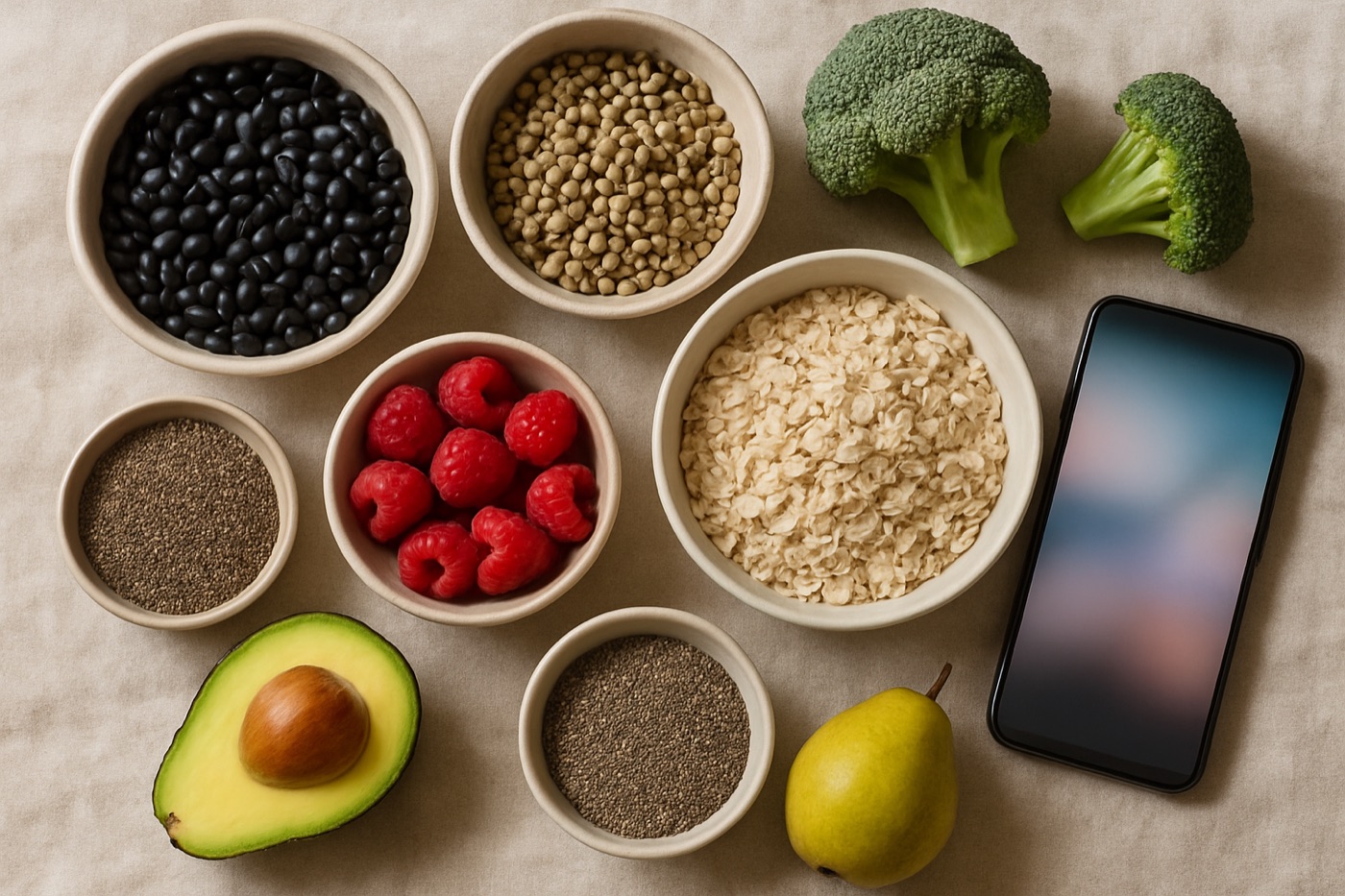
There is a strong case that fiber is the most under-eaten nutrient in the American diet. Only about 5% of Americans meet the recommended intake, according to a review in the American Journal of Lifestyle Medicine, and the typical adult eats around 15 grams a day, roughly half of what the Dietary Guidelines suggest. The consequences are not small. A 2019 series of meta-analyses in The Lancet, commissioned in part by the World Health Organization, found that people eating the most fiber (25 to 29 grams a day) had a 15% to 30% lower risk of death from any cause and of heart disease, stroke, type 2 diabetes and colorectal cancer than people eating the least.
The surprising part is how few people know their own number. Fiber is not on the front of the package, it does not show up in a calorie count, and it is easy to assume a salad-and-sandwich day must be “plenty.” A fiber tracker app fixes that in about a week. Here are the ones worth installing.
The short list
| App | Best for | Fiber shown | Ways to log | Free plan | Paid plan |
|---|---|---|---|---|---|
| PlateLens | Best fiber tracker overall | Per meal and per day, with total carbs, net carbs and sugar | Photo, barcode, voice, typed search | Yes, never expires | $34.99/yr |
| Cronometer | Granular nutrient reports | Per food and per day | Barcode, typed search | Yes | $59.99/yr (Gold) |
| MyFitnessPal | Largest crowd-sourced database | Per food and per day | Barcode, typed search | Yes | $79.99/yr |
What makes a good fiber tracker
Every calorie app stores a fiber value somewhere. A good fiber tracker does four things on top of that:
- Shows fiber where you will see it. Per meal, not buried three taps deep, so you notice that breakfast was 2 grams.
- Makes whole foods quick to log. The best fiber sources (beans, lentils, fruit, vegetables, whole grains) rarely have barcodes. Photo and voice logging matter more here than for almost any other nutrient.
- Reads labels for everything else. For bread, cereal, crackers and bars, barcode scanning pulls the label’s fiber number directly, and it varies enormously between brands.
- Fits the rest of your goals. Fiber is a carbohydrate. If you also watch carbs, net carbs or calories, the fiber number should live in the same diary.
Best overall: PlateLens
PlateLens does all four. Its fiber numbers come from a verified database of 1.2 million+ foods and, for packaged food, straight from the product label through the barcode, and it is the fastest way to log the beans, vegetables and fruit that actually carry fiber.
Every meal in your PlateLens diary shows fiber next to total carbohydrates, net carbs and sugar, so a fiber goal and a carb budget live in the same view. Net carbs are calculated automatically (total carbs minus fiber and sugar alcohols), which matters if you are increasing fiber on a lower-carb plan. Fiber is one of 82+ nutrients PlateLens tracks, alongside potassium, magnesium and the other minerals that tend to rise with it.
Logging is where it pulls ahead for this job. A bowl of lentil soup or a plate of roasted vegetables has no barcode; in PlateLens you photograph it, the app identifies the foods and portions, and you confirm or adjust any ingredient before saving. You can also say “oatmeal with chia and a sliced pear” out loud, or type a search against 1.2 million+ verified foods. For packaged foods, the barcode scanner covers 820,000+ branded products, so the difference between a 1-gram and a 5-gram slice of bread is captured from the label.
The rest of the app helps you change the number rather than just watch it. The AI coach reads your diary, so you can ask which of your regular meals could add 10 grams of fiber. The recipe and meal planner suggests meals and builds a grocery list. Water logging sits in the same diary, which is useful because fluid should rise with fiber. Two-way sync with Apple Health and Health Connect keeps the rest of your health data alongside, and the full web app is included on every plan.
Price: the free plan never expires and includes fiber tracking, unlimited barcode and manual logging, 3 AI photo scans a day, 5 AI coach messages a day and the web app. Premium costs $34.99 a year or $9.99 a month. Download it on the App Store or Google Play.
For detailed nutrient reports: Cronometer
Cronometer is popular with people who enjoy detailed nutrient reports. Fiber appears per food and for the day. Logging is by barcode and database search. There is a free version, and Gold costs $59.99 a year.
For the biggest database: MyFitnessPal
MyFitnessPal has the largest raw food database in the category, which helps with packaged foods. Fiber is part of its nutrition view. Most entries are user-submitted, so check the fiber figure on foods you log regularly against the label. There is a free version; Premium is $79.99 a year.
How much fiber do you need?
The Dietary Guidelines for Americans set fiber at 14 grams per 1,000 calories. In practice that means:
| Group | Daily fiber |
|---|---|
| Women, 19–50 | 25 g |
| Men, 19–50 | 38 g |
| Women, 51+ | 21 g |
| Men, 51+ | 30 g |
The Lancet meta-analyses found the benefits kept accruing above 25 to 29 grams a day, so those numbers are a floor, not a ceiling, for most healthy adults. If you have a digestive condition such as IBS or inflammatory bowel disease, or have been told to follow a low-residue diet, your clinician’s advice comes first.
A day of fiber, tracked
Here is what a typical “healthy-looking” day reveals when you log it, and how three small changes fix it.
| Meal | Before | Fiber | After | Fiber |
|---|---|---|---|---|
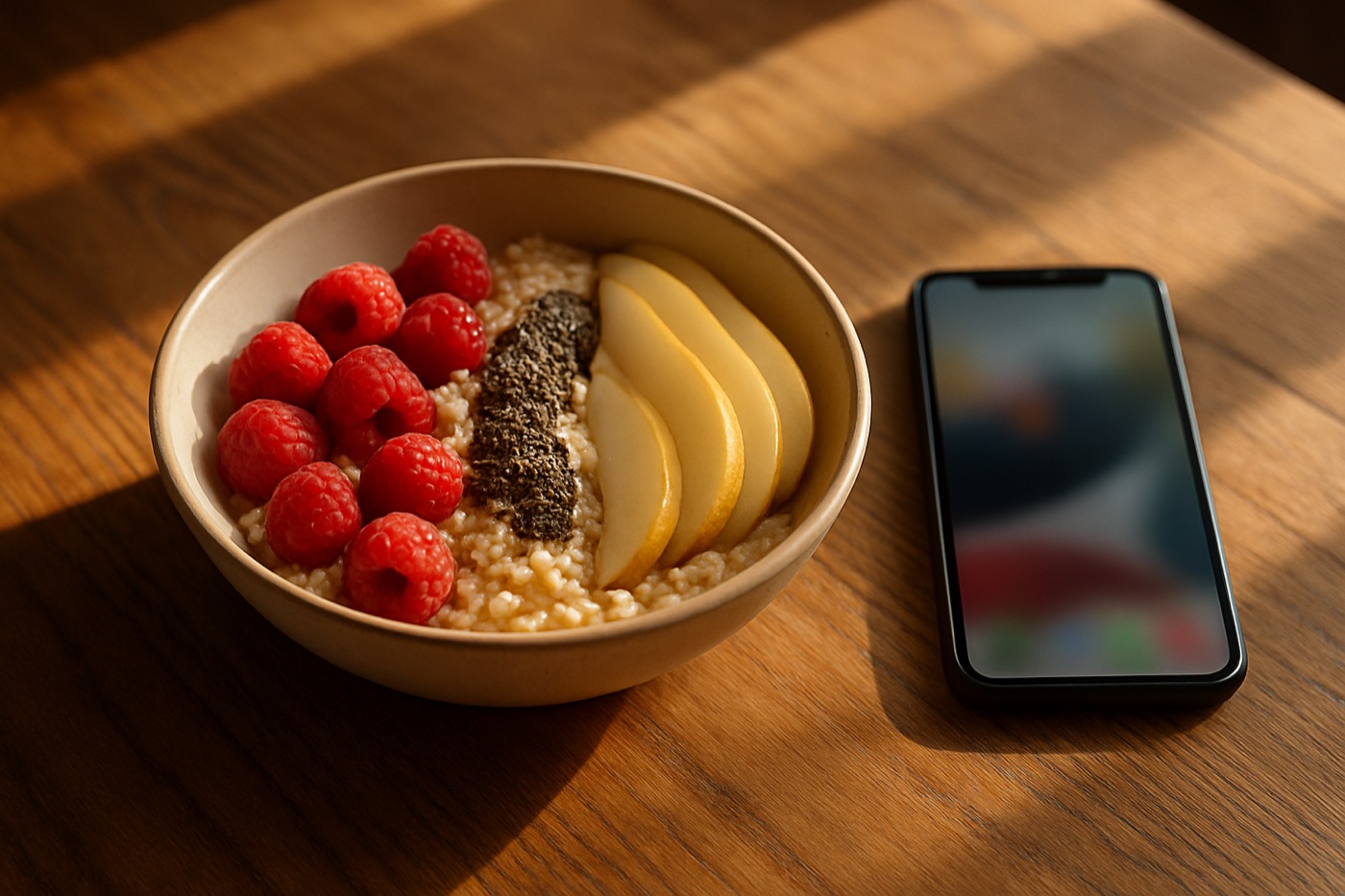
| Breakfast | Flavored yogurt, granola | 2 g | Plain yogurt, oats, raspberries, chia | 12 g |
| Lunch | Turkey sandwich on white bread, apple | 6 g | Same sandwich on whole-grain bread, apple | 9 g |
| Snack | Crackers | 1 g | Hummus and carrots | 5 g |
| Dinner | Chicken, white rice, side salad | 3 g | Chicken, brown rice, side salad, half a cup of black beans | 13 g |
| Total | 12 g | 39 g |
Nothing on the “before” side looks unhealthy, which is exactly why fiber gaps persist. The tracker shows where the grams are missing, meal by meal. Values are typical figures and vary by brand and portion; scanning the actual label and logging what you actually ate is what makes the number yours.
Five habits for raising your fiber
- Find your baseline first. Log a normal week before changing anything. Most people are surprised, in one direction.
- Fix breakfast. It is the easiest meal to add 8 to 10 grams to: oats, berries, chia or ground flax, whole-grain toast.
- Add a legume a day. Half a cup of beans or lentils is 6 to 8 grams on its own.
- Go up gradually. Add about 5 grams a week and drink more water as you go; doubling overnight is the usual cause of bloating.
- Scan the bread and cereal. Fiber per slice or serving varies several-fold between brands that look alike.
The bottom line
A fiber tracker earns its place in the first week, when you see your real number for the first time. For most people the best one is PlateLens: fiber for every meal next to your carbs and net carbs, photo logging for the beans and vegetables that have no barcode, and a free plan that never expires. Choose Cronometer if detailed nutrient reports are what you enjoy, and MyFitnessPal if the size of the database matters most.